
English: Phonics & Reading
Hello, my name is Mrs. Sembi and I lead Reading and Phonics at Elms Farm. I believe that every child has the right to be able to read and that it is a key to success in life. I love reading, my favourite book is Guess how much I love you by Sam McBratney. Books can take you to different worlds, to explore different cultures and I love the magic they bring.
A Whole School Love of Reading
At Elms Farm, we want every child to become a confident, fluent reader who loves books. Our reading curriculum is bespoke and carefully designed to give children access to a wide range of high-quality texts (EEF, 2021). Each unit uses rich extracts from diverse literature to teach reading skills explicitly, while whole-class reading sessions at the end of the day allow pupils to enjoy complete stories together and develop a love of reading (EEF Teacher Choices trial, 2022).
We teach reading through the National Curriculum reading domains (such as inference, prediction, and summarising) and provide discrete lessons focused on comprehension strategies. These strategies help children understand, interpret, and discuss texts in depth. Teachers model expert reading behaviours and guide pupils to apply these skills independently.
We love reading at Elms Farm. Books are at the heart of our curriculum and feature prominently in all aspects of our school life. Each week, we update our book display linked to our key values of Ambition, Community and Equality.
We have two amazing libraries full of exciting new texts which are regularly updated. Pupils can access the libraries throughout the school day to borrow books to read for pleasure. Every fortnight, each class will visit the library and teachers will support children to choose a book to take home. We encourage children to choose something a little bit different or a book linked to a special interest from the library.
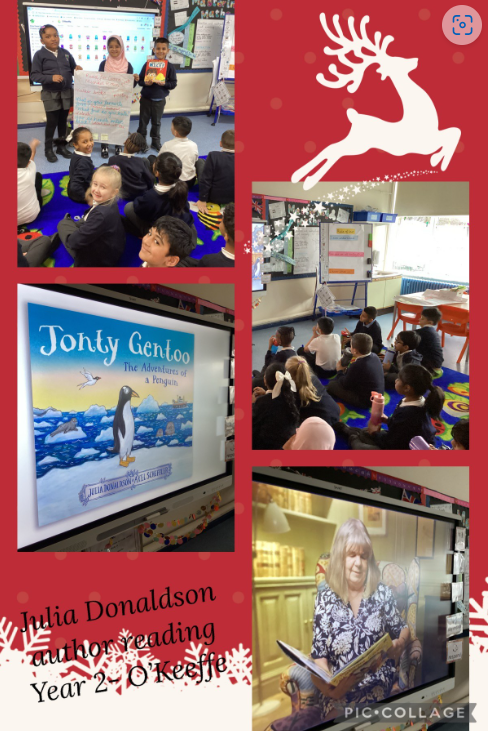
Author Virtual Visits
This December, lots of our classes have taken part in virtual author visits. The children enjoyed learning more about the writing and illustrating process and even completed some of their own writing and drawing. At the end, we all enjoyed listening to the authors read their own stories.
Book Fair
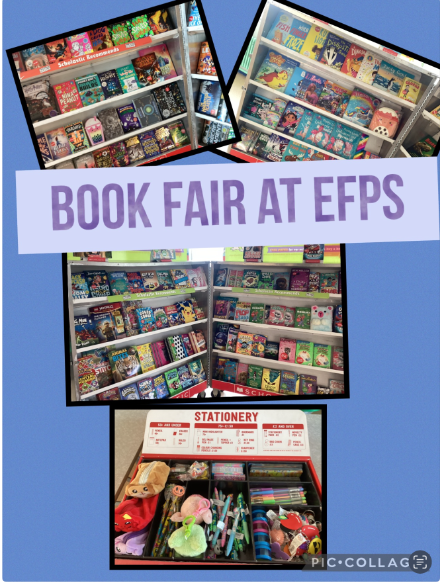
At parents evening this year we had our own book fair. Lots of children enjoyed looking at new release books on the shelves and bought books with their parents. We have been hearing all about their book choices and recommendations from the books they chose.
Reading Parent Workshops
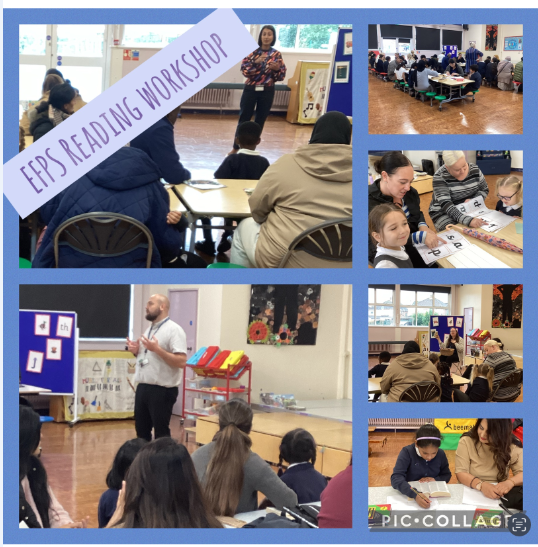
This year all parents at Elms Farm have had the opportunity to work with their children in a parent workshop about reading. We learn about phonics, how to read with our children at home and then completed a lesson alongside the children. All the parents and children had great sessions and enjoyed working together.
Teaching Structures in E.Y.F.S & Key Stage One
Phonics
We follow Little Wandle as our only approach to decoding. This is a progressive and consistent approach to Phonics teaching, complimented by catch-up programmes to support pupils.
Phonics at Elms Farm
We teach phonics through the Little Wandle Letters and Sounds Revised (DfE 2021) programme, ensuring a systematic and synthetic approach to early reading (EEF, 2018). Daily phonics lessons are delivered with fidelity to the scheme, and children who need extra support receive targeted daily interventions to help them keep up rather than catch up. This approach builds strong foundations for reading and writing across the school.
Phonics teaches children the correct letter-sound correspondence, which enables them to decode (breakdown) words for reading, and to segment words into sounds for spelling.
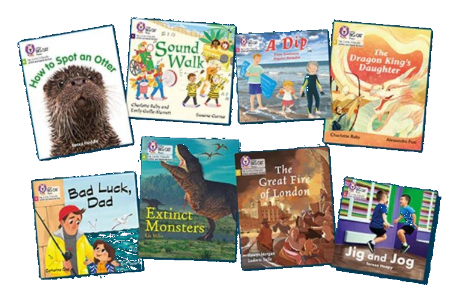
From Reception, we teach whole class Phonics lessons with targeted interventions to support pupils who may require additional revision or support. We complement our Phonics lessons with focused Guided Reading sessions. These sessions are based around books closely matched to pupil phonological ability, meaning that they are 95% decodable. Phonologically appropriate books are sent home each week.
Guided Reading
From Year 1, children take part in guided reading sessions three times per week. Each week, children refine their reading skills by reading a book closely matched to their phonological ability. During these sessions, children will learn new vocabulary and learn about intonation and expression, as well as developing comprehension skills.
Below, you can see the structure of these lessons.
|
Day 1 |
Day 2 |
Day 3 |
|
Decoding and reading aloud.
|
Return to the text for retrieval (1b) and inference (1d)
|
Read the text with prosody. Concentrate on fluency and expression. |
Teachers use the National Curriculum to plan guided reading sessions, ensuring that children develop reading skills over time.
|
KS1 Reading Content Domains |
|
|
1a |
draw on knowledge of vocabulary to understand texts |
|
1b |
identify / explain key aspects of fiction and non-fiction texts, such as characters, events, titles and information |
|
1c |
identify and explain the sequence of events in texts |
|
1d |
make inferences from the text |
|
1e |
predict what might happen on the basis of what has been read so far |
Teaching Structure in Key Stage Two
Our teachers read texts in class to model prosody and to explore vocabulary.
We use a Mastery Approach to whole class reading in Key Stage Two. This aims to develop the reading comprehension and contextual understanding for our pupils. We use the 'DERIC' approach to equip our children with all the necessary skills to become skilled readers with excellent comprehension skills.

Each year group teaches a series of carefully selected narratives, non-fiction texts and poems over the academic year, ensuring broad coverage. Throughout the week, teachers will develop reading accuracy, automaticity and prosody so that children become fluent readers.
|
|
Monday |
Tuesday |
Wednesday |
Thursday |
|
KS2 |
Vocabulary exploration and shared reading (2a)
|
Return to the text for retrieval (2b) and inference (2d)
|
Return to the text for mastery session (predict 2e/relate 2f/compare 2h) |
Other focus skill (could be another extract) (Sequence and summarise 2c/Explore choice of words 2g) |
Home Reading

Children are expected to read at home for a minimum of 5 times per week. Adults at home are expected to sign their reading diary each time they read. This is a fantastic opportunity to hear children read and share some special moments.
E.Y.F.S, Key Stage 1 pupils and those in specific intervention groups in Key Stage 2 take home reading books from group reading sessions which are specifically matched to their phonological ability. With guidance from their teachers, Key Stage 2 readers are invited to choose books from their class libraries to take home. They are encouraged to explore a wide range of modern and classic literature.
Staff record home reading daily on a class chart to ensure that they can provide additional reading opportunities with a member of staff in school if needed. Class teachers hear each child read at least once every fortnight. They will record this reading in the child's diary.
Our reading progression map
Our text progression map shows the texts that children will read during their school career.